Showing posts with label mariana valverde. Show all posts

Sunday, January 15, 2012

Rights of Passage: Sidewalks and the Regulation of Public Flow by Nicholas K. Blomley


Trust Google Images to present something that illustrates the cutting edge of socio-legal theory. Hmm. Or, actually, trust me to hastily argue that a silly picture is worth 111 pages of words. This is, of course, a great underestimation of Blomley's work and I guarantee (if I have any remaining credibility, that is) that arguments like the foregoing--tenuous at best, based on cursory research--are not to be found in the book of which this review takes as its subject. Additionally, and unlike that last sentence, Blomley's writing is lucid. Though his book is about something as pedestrian as, well, the pedestrianist logic that forms the foundation of the sidewalk, he makes his argument interesting and his prose playful.

Through his analysis, Blomley seeks to demonstrate how his choice to conceptualize space in terms of "civic humanism" in his past work "blackboxed" the processes that enabled the oppressive regulation of minorities (among other things). According to Blomley, socio-legal theorists and civil rights rhetoricians conceive of the sidewalk as a part of a Habermasian public sphere in which people should ideally be allowed to exercise their rights of free speech. However, by inquiring into the processes and logics that inform the material construction of the sidewalk (historically, municipally, judicially and legislatively) Blomley finds that its central purpose is to allow pedestrians' free, unobstructed circulation. Thus, sidewalks are constructed by civil engineers with a view to minimizing obstructions (human and non-human alike) to pedestrian flow. Hence, Blomley's provocative article title, "How to Turn a Beggar into a Bus Stop," and the google image of the anthropomorphized sign above; using the logic of pedestrianism, all barriers to foot traffic are equal, and we can objectify beggars, crowds of people waiting at a bus stop, and a street sign marking the bus stop in the same way. Judges and legislators conceive of these spaces similarly, viewing sidewalks' principal purpose as facilitating people's movement; people's right to speech are secondary in this context and should minimally impair people's (constitutionally entrenched, at least in Canada) right to mobility. Moreover, decisionmakers can assure themselves that they are not discriminaing when they pass laws against panhandling or find that people should not be able to sleep on the sidewalk if they are insulating themselves from the cold concrete by laying out newspaper (a.k.a. "a structure"); as anyone, regardless of class, is entitled to freely pass down these municipally tended tracks these decisions are in the public interest. Blomley concludes that human rights activists will continue to be frustrated and disappointed by the regulation of the sidewalk so long as they keep arguing in terms of the public sphere. He closes by suggesting we look beyond arguments about equal rights, by rejecting this idea that we are one people all stumbling around, bumping into, obstructing each other under the blanket of law. He seems to be arguing that instead of looking to the courts to determine how the sidewalk should be administered, justice will be done by having municipalities think more critically about the sidewalk. For Blomley, it's not a question of their bad faith, but the continued reliance on logics that structure human environments and behavioural possibilities that are indifferent and occasionally offensive to social justice.

As you can probably tell from the long summary of its contents, I really enjoyed this book. For one, it was informed by Blomley's work (of course), Riles, Valverde, and ANT. I wrote a paper in which I sought to account for "the how" and the space of Canadian law in one of the more influential graduate courses I took. It was especially exciting to see how someone else employed drew on these sources in their analysis. Second, I have recently been preoccupied by the practical realities and possible political and ethical implications of a street vendor program in Vancouver, so I am happy to have the work of a locally engaged academic from which to draw.

Fin.

Tuesday, October 11, 2011

Full of it


The title of this particular post could refer to many things, including that right now I am very full from Thanksgiving dinner: day 3. The subject might also allude to this blog which is--oh woe--full of neglect. I have not been especially faithful to this site, betraying my commitment to it by attending to the Pivot blog. However, for what it's worth, gentle reader, the Pivot Point I made today was book-informed.

Thursday, May 26, 2011

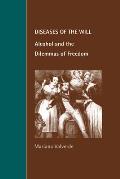
Diseases of the Will: Alcohol and the Dilemmas of Freedom by Mariana Valverde


In this work, Valverde investigates how people and institutions have conceptualized the consumption of alcohol in the West. Specifically, she inquired about why the medical profession has not asserted ownership over the regulation of alcohol as it has with sexuality, and madness. Medicalizing the alcoholic, or the inebriate identity, was complicated by the popular and professional recognition of a link between habit and the one’s consumption of alcohol. Instead of confidently asserting that one’s drinking was due to a trait lodged within one’s constitution and thus within their purview, doctors did not represent a divided front with respect to drinking; they were divided about whether and to what extent one’s disposition to drink was (also?) a question of subjects’ routines and choices. Into the twentieth century, regulators and alcohologists of alcohol consumption have not resolved what it is that makes drinking problematic (even if their continued interest in it suggests that they consider it to have this potential), employing a number of different strategies that vary considerably by jurisdiction. A common element, she argues, seems to be that regulation black boxes how drinking alcohol leads to disorder and incivility; as if to tacitly affirm its ignorance of what it is about unruly drinkers that causes them to act disturbingly, governments impose regulations indirectly—limiting potential drinkers’ choices by dictating what shall [not] occur in certain spaces, but not criminalizing particular individuals’ actual consumption of alcohol.

Especially interesting was Valverde’s discussion of Alcoholics Anonymous, and how the ontology propounded by Bill W. and co. has become so salient. It reminded me vaguely of some of Agamben’s ideas. AA (et al.) would have it that everyone is the sovereign of their own kingdom, the hero of their own epic, the master of their own destiny. A.A. does recognize that an individual coexists with a higher power as well. This power does not really govern the individual, even if personal contentment and freedom require one to reconcile one’s purposes with this benevolent force (which can be done with a little work, with a little submission). At the same time, however, AA would have it that the “alcoholics” who it says should hold themselves accountable and responsible for their actions, who can remake their lives every day, will drown when influenced by the irresistible force of drink. It would seem that they are not so sovereign at all, but that the exceptional power exerted by alcohol makes it their ruler, compelling them to rearrange their lives so that they become out of synch. with their higher power or have to live their life “step by step”... thus, regardless of the salience of the aa argument, it is nevertheless confounded by the structure/agency problem.

Valverde notes the dominance of this model of the will, how it has been uncritically adopted by the recovery movement, and how at a cultural level its logic has become commonsense. While I was reading I was reminded of an example of a counter-discourse (from one of the few episodes I have watched of) Will and Grace.

Here Karen Walker characterizes A.A. mantras as “hate speech,” that the organization “goes against everything I believe to be good and pure in this world,” and that it is obliterating her support network. Here this outspoken non-alcoholic identifies people like her as a class that should be considered apart from A.A. but who are nevertheless minorities in danger of being assimilated by it. She, and people who are deemed like her by other characters of the show, might be worthy of study as an example of alternatives to the addict identity.

I have little to add to this summary right now, except maybe that I was impressed by the sensitivity that she wrote about AA. Valverde was very clear that her account was an exploratory one. She introduced the reader to this group, and in so doing highlighted the tremendous amount of comfort and support that it provided rather than rake it across the coals for the epistemological problems with its concept of free will. It was refreshing to read something like that, which instead of belittling things for being logically incoherent, acknowledged that recovery groups provide a function for which our current systems of thinking are not analytically developed enough to account.