Thursday, July 21, 2011

The Grouse Grind as told by Liz Cave and Reflections in a Golden Eye by Carson McCullers


So if this were not a literature blog I could write entries about, for instance, my harrowing experience completing the Grouse Grind with the Livy on Tuesday. She suggested that I could rightfully blog about it if I discussed it as a text. Indeed, I could... for instance, the experience was interrupted by two apparently unreliable narrators... one which marked hikers’ progress up the trail in orange spray paint and the other that communicated through official-looking signs. Other themes included peoples’ apparent jealousy of my jeans, and the Liv character’s tremendous foresight for bringing buns apart from her God-given ones. While this experience may not have been strictly literary, my ultimate justification for posting these observations is that this experience was occasionally litterey, and surely the two being almost homonyms makes them pretty well synonymous. See, no difference, only diffĂ©rance.

To salvage this entry to a topic that is more literally literature, I just finished Carson McCullers’ Reflections in a Golden Eye. I think Liv described the McCullers as “sensitive but not sentimental.” This is evinced in the narrator’s preoccupation with the relational dynamics between characters that seem to inform their actions, over certain gruesome “symptoms” of those relationships (like a character cutting off her nipples with garden shears).

I observed many parallels between this work and the film American Beauty. It contains a male military officer who hates/identifies/loves someone who in many ways seems detached from “The System” and who kills him in a murder suicide. A mysterious and socially unattached young man who becomes enamoured by a woman. A character who contemplates “a scrap of newspaper fluttering in the wind” which seems an awful lot like the plastic bag. A woman who is treated as though she is mad. Most of the characters seem to feel empty, or unfulfilled. I would not be surprised if Alan Ball is a Carson McCullers fan.

Of course, what American beauty lacks is a character like Anacleto who, wile preparing a tray for an inordinate amount of time, “kept up a soft and vivacious chattering to himself. The Major caught something about Mr. Rudolf Serkin and about a cat which was walking around in a candy counter with bits of peanut-brittle stuck to its fur.” Awesome. :)

Tuesday, July 19, 2011

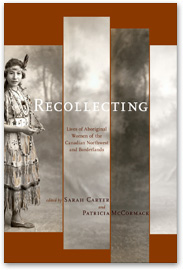
Recollecting: Lives of Aboriginal Women of the Canadian Northwest and Borderlands, edited by Sarah Carter and Patricia A. McCormack


Up until last week I thought my local library was only good for borrowing DVD’s, and stocking a non-fiction section that addresses the most cutting-edge issues of the early 1990’s. Imagine my delight when I saw among its new acquisitions a collection edited by Sarah Carter (she wrote The Importance of Being Monogamous: Marriage and Nation Building in Western Canada to 1915—a fascinating account of how fiercely guarded a particular idea of marriage and family [wa/i]s, and how central it was to Canadian nation-building).

The essays collected in this anthology are conscious that, as one such contributor specifically observes of Sara Riel, earlier writers of biography have only acknowledged women when they “[celebrate them] as an event in the life of a great man” (Erickson, 2011, 117). However, these authors take as their objective demonstrating how, “Aboriginal women, instead of fading into the background as traditional narratives of Western settlement suggest, remained at the forefront of their communities’ survival and persistence” (Burnett, 2011, p.158).
Given that traditional historical accounts are silent about the centrality of their female First Nations and Metis subjects, the contributors to this collection use multiple methods and rely on many sources of information. For instance, Susan Berry demonstrates how the information about artisan skill and style that one reads from an artefact might be read alongside HBC invoices and a traveller’s diary to extrapolate who the artist was. In uncovering these identities, Berry also fits these characters, and their stories (gleaned from HBC records, newspaper reports, etc.) into a travelogue that was originally silent about them. Moreover, she traces her subjects’ social location beyond their contact with the author of the diary to showcase the increasing marginalization of these highly skilled Metis women and their families with the progress of the Canadian state.

On the whole, this collection is full of well-written essays with authors whose use of sources is imaginative, innovative, interesting, and compelling. Additionally, several of the authors focus on the connection between first peoples and specifically their relatives who currently live in Scotland. Is this kind of diaspora much considered in the literature (I'm hardly a scholar of First Nations studies)?

The only suggestion I would have is if the reader is not familiar with Canadian history that s/he supplement this with a more traditional history resource. Indeed, it would provide needed context when the authors note an event like the Red River Rebellion but do not elaborate on it in detail.

Monday, July 11, 2011

The Tea Room Trade by Laud Humphreys


Well, for the past month I have fallen off the reading wagon, but I nevertheless can claim the distinction of remaining a Te[a]totaller this month, and in some pretty public places too.

A lot has already been said about the ethics of the research design that informed Laud Humphreys' Tea Room Trade: Impersonal Sex in Public Places (lookit me! citing Wikipedia :S), so I will not say too much about that here. I would just encourage people who think that his method sounds appalling that they should read the book; Humphreys really lays it out, and engages with his critics.

What was most striking to me was how different my impression of the book was relative to another summary I had heard of it. In an undergraduate introduction to research methods, one relatively coarse course instructor described Laud Humphreys as this researcher who spied on gay men when they had sex in washrooms. According to this man, Humphreys then followed them back to their houses and extorted people’s compliance with his research by interviewing them while their wives were at home. However, upon reading the book, what stood out to me was how my instructor re-evaluated its findings when he summarized it. Indeed, in this work, Humphreys distinguished several types of people who would be sexually active at the tea rooms, only one of whom might be called homosexual/gay/etc. However, my instructor apparently felt that he could dismiss this part of the analysis.

Like others many others I think treating sexual acts between men and homosexual identity as metonyms is a feature of the present day. This was underlined by what was not present in this book. Indeed, Humphreys did not take a stand about the logical difficulty of conflating acts with identity. Perhaps this is because this work was born in the 1960’s, before the Gay Liberation Movement suggested that being gay was a choice and presumably depended on the fulfillment of a set of (sexual) acts.

What was more pressing to Humphreys was critiquing the religious beliefs that he thought contributed to men’s experience of frigid relationships, and with which they were well-versed enough to hide behind whilst still engaging in illicit sex. Given his background as a radical Episcopal priest, this critique seems natural.

Sadly, the compelling argument with which Humphreys concludes—in which he refers to his findings that tearoom sex is not exploitative, that sex in private is much more likely to involve violence, and concludes that police harassment of people who engage in such sex does not contribute to public safety—was obscured by the ethical mess of his research design. In any case, the innovative method, and provocative arguments are definitely worth revisiting even forty years later.

Sunday, June 5, 2011

"Diseases of the Will" to return library books, care of adoring fan

My discerning readership made this troubling discovery this evening. Rest assured that I will rectify this departure from the ideal library situation when I commence the Montreal leg of my book tour in a mere...10 days!

Friday, June 3, 2011

Selected Poems: 1977-1997 by Patrick Lane


So as not to incense the more literarily minded, I will try to make my comments as uncontroversial as possible:
-In Selected Poems, Patrick Lane evokes the image of stone frequently
-these poems could not be called cheerful
-If the Bechdel Test applied to poems, Patrick Lane's "Commune Girl" would not pass it
-the following poem reminded me of how difficult it was to think coherently of someone's cancer diagnosis last year:


There Is a Time

for Robert Kroetsch

There is a time when the world is hard,
the winters cold and a woman
sits before a door, watching through wood
for the arrival of a man. Perhaps a child is ill
and it is not winter after all. Perhaps
the dust settles in a child's breath,
a breath so fragile it barely exists.
Tuberculosis or pneumonia. Perhaps
these words place her there, these words
naming the disease and still not curing it.

Maybe it is not the man she waits for.
We want it to be someone. We want
someone to relieve this hour. On the next farm
the nearest woman to the woman is also sitting
in dust or cold or watching a door. She is no help.
So let it be the man. He is in the barn
watching the breathing of his horses.
They are slow and beautiful,
their breath almost freezing in perfect clouds.
Their harness hanging down from the stalls
gleams, although old and worn. He is old and worn.
The woman is waiting behind the door
but he is afraid to go there because of her eyes
and the child who is dying.

There is a time when it is like this,
when the hours are this cold, when the hours
are no longer than a bit of dust in an eye,
a frozen cloud of breath, a single splinter in a door
large enough to be a life it is so small and perfect.
Perhaps there are soldiers coming from far away,
their buttons dull with dust or bright with cold,
though we cannot imagine why they would come here,
or a storm rolling down from the north
like a millwheel into their lives.

Perhaps it is winter.
There could be snow. Or it could be dust.
Maybe there is no child, no man, no woman
and the words we imagined have not been invented
to name the disease there is no child to catch.
Maybe the names were there in a time before them
and they have been forgotten. For now let them die
as we think of them and after they are dead
we will imagine them alive again,
the barn, the breath, the woman, the door.

Sunday, May 29, 2011

Jane Eyre by Charlotte Bronte

I rather callously left Jane as she tried to find a hovel in the moors in which to sleep, so I should probably join her again. Before I do, however, I'll just note that the best part of reading Jane Eyre is still that I got to slouch up to the librarian like a prep' school rapper when I inquired, "In what area might I find the Fic BRO?"

Thursday, May 26, 2011

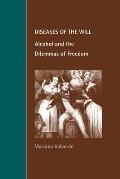
Diseases of the Will: Alcohol and the Dilemmas of Freedom by Mariana Valverde


In this work, Valverde investigates how people and institutions have conceptualized the consumption of alcohol in the West. Specifically, she inquired about why the medical profession has not asserted ownership over the regulation of alcohol as it has with sexuality, and madness. Medicalizing the alcoholic, or the inebriate identity, was complicated by the popular and professional recognition of a link between habit and the one’s consumption of alcohol. Instead of confidently asserting that one’s drinking was due to a trait lodged within one’s constitution and thus within their purview, doctors did not represent a divided front with respect to drinking; they were divided about whether and to what extent one’s disposition to drink was (also?) a question of subjects’ routines and choices. Into the twentieth century, regulators and alcohologists of alcohol consumption have not resolved what it is that makes drinking problematic (even if their continued interest in it suggests that they consider it to have this potential), employing a number of different strategies that vary considerably by jurisdiction. A common element, she argues, seems to be that regulation black boxes how drinking alcohol leads to disorder and incivility; as if to tacitly affirm its ignorance of what it is about unruly drinkers that causes them to act disturbingly, governments impose regulations indirectly—limiting potential drinkers’ choices by dictating what shall [not] occur in certain spaces, but not criminalizing particular individuals’ actual consumption of alcohol.

Especially interesting was Valverde’s discussion of Alcoholics Anonymous, and how the ontology propounded by Bill W. and co. has become so salient. It reminded me vaguely of some of Agamben’s ideas. AA (et al.) would have it that everyone is the sovereign of their own kingdom, the hero of their own epic, the master of their own destiny. A.A. does recognize that an individual coexists with a higher power as well. This power does not really govern the individual, even if personal contentment and freedom require one to reconcile one’s purposes with this benevolent force (which can be done with a little work, with a little submission). At the same time, however, AA would have it that the “alcoholics” who it says should hold themselves accountable and responsible for their actions, who can remake their lives every day, will drown when influenced by the irresistible force of drink. It would seem that they are not so sovereign at all, but that the exceptional power exerted by alcohol makes it their ruler, compelling them to rearrange their lives so that they become out of synch. with their higher power or have to live their life “step by step”... thus, regardless of the salience of the aa argument, it is nevertheless confounded by the structure/agency problem.

Valverde notes the dominance of this model of the will, how it has been uncritically adopted by the recovery movement, and how at a cultural level its logic has become commonsense. While I was reading I was reminded of an example of a counter-discourse (from one of the few episodes I have watched of) Will and Grace.

Here Karen Walker characterizes A.A. mantras as “hate speech,” that the organization “goes against everything I believe to be good and pure in this world,” and that it is obliterating her support network. Here this outspoken non-alcoholic identifies people like her as a class that should be considered apart from A.A. but who are nevertheless minorities in danger of being assimilated by it. She, and people who are deemed like her by other characters of the show, might be worthy of study as an example of alternatives to the addict identity.

I have little to add to this summary right now, except maybe that I was impressed by the sensitivity that she wrote about AA. Valverde was very clear that her account was an exploratory one. She introduced the reader to this group, and in so doing highlighted the tremendous amount of comfort and support that it provided rather than rake it across the coals for the epistemological problems with its concept of free will. It was refreshing to read something like that, which instead of belittling things for being logically incoherent, acknowledged that recovery groups provide a function for which our current systems of thinking are not analytically developed enough to account.